

Kitui Marks World Bee Day as CO Gladys Kivoto Rallies Residents to Embrace Beekeeping

Kitui super Chief Officer for Agriculture and Fisheries Gladys Mami Kivoto today led Kitui County in joining the rest of the world in marking World Bee Day 2026 at Kanyangi Market in Kanyangi ward, Kitui Rural Constituency, calling on residents to embrace beekeeping as a source of income and environmental conservation.

World Bee Day is celebrated annually on May 20 following a resolution by the United Nations aimed at raising awareness on the crucial role bees and other pollinators play in sustaining ecosystems, food security, biodiversity and livelihoods across the globe.
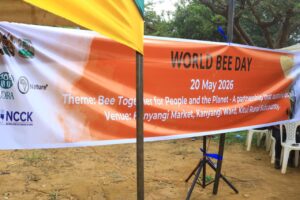
The celebrations brought together officials from the Ministry of Agriculture, the Department of Apiculture, development partners, stakeholders, and local residents under the global theme, “Bee Together for People and the Planet – A Partnership That Sustains Us All.” to commemorate the day and raise awareness on the importance of protecting bees and promoting apiculture.

Speaking during the event, Chief Officer Gladys Mami Kivoto urged Kitui residents to embrace beekeeping as a viable economic activity capable of improving household incomes and strengthening food security across the county.
She noted that honey and other bee products continue to attract a ready market both locally and internationally, and can provide sustainable income opportunities for farmers, youth and women groups if properly harnessed. “I want to encourage everyone to embrace beekeeping because it is one of the most rewarding agricultural ventures. Honey has a ready market and through modern apiculture, many families can improve their livelihoods and create wealth,” said Kivoto.

She further emphasized the County Government’s commitment to supporting farmers through training, extension services and partnerships aimed at boosting honey production and environmental conservation.

In his address, Chief officer for Livestock and Apiculture, Benjamin Kyambi called on residents to protect bees and their habitats, describing bees as among the world’s most important pollinators. “Bees are essential to our survival because they support pollination, which is key to food production and biodiversity conservation. Protecting bees means protecting our future,” said Kyambi.

The event also highlighted the important role played by bees and other pollinators in keeping ecosystems healthy and productive. Participants were sensitized on modern beekeeping practices, environmental conservation and the need to work together in safeguarding pollinators for future generations.

World Bee Day continues to serve as a reminder of the long-standing partnership between humans and bees, and the need for collective action in protecting the tiny yet powerful creatures that help keep the world blooming.
Ends///